
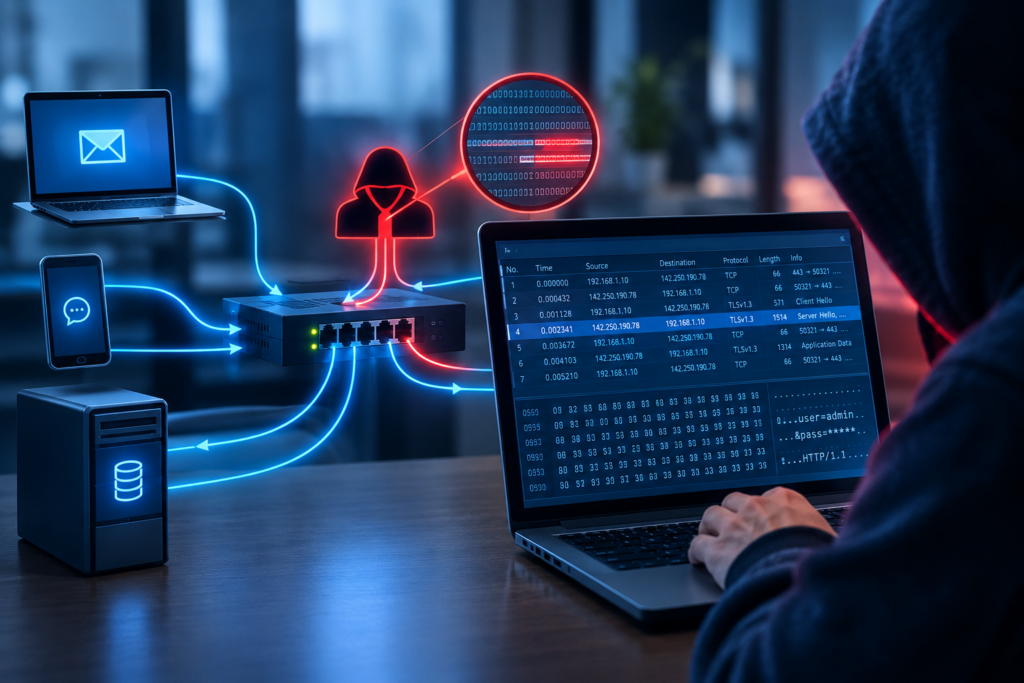
How Packet Sniffing Threatens Modern Network Security
Modern organizations rely on interconnected networks to support cloud applications, remote work, online transactions, and the continuous exchange of sensitive information. Every email, login request, file transfer, and web session generates network packets that travel between devices. While this connectivity enables business efficiency, it also creates opportunities for cybercriminals to intercept valuable data through packet sniffing attacks.
Packet sniffing can serve legitimate purposes, such as network troubleshooting, performance optimization, and cybersecurity monitoring. However, when used maliciously, it enables attackers to capture sensitive information including usernames, passwords, financial records, and confidential communications without the victim’s knowledge.
The impact of compromised network traffic can be severe. According to the IBM Cost of a Data Breach Report 2024, the global average cost of a data breach reached $4.88 million, representing a 10% increase over the previous year. The report also found that 70% of organizations experienced significant operational disruption following a breach, highlighting the importance of securing network communications before attackers gain access. (Source: IBM Cost of a Data Breach Report 2024)
As network environments become increasingly complex, many organizations work with a cybersecurity consultant to strengthen network visibility, identify interception risks, and implement layered defenses that reduce the likelihood of packet sniffing attacks.
What Is Packet Sniffing?
Packet sniffing is the process of capturing and analyzing data packets as they travel across a network. Specialized software or hardware known as a packet sniffer monitors network traffic, allowing administrators to inspect communications between connected devices.
When used by IT and security professionals, packet sniffing is an essential diagnostic tool that helps troubleshoot connectivity issues, monitor network performance, investigate suspicious activity, and identify potential security weaknesses. Popular tools such as Wireshark are widely used for legitimate packet analysis in enterprise environments.
Unfortunately, cybercriminals also exploit packet sniffing to intercept sensitive information transmitted across unsecured or poorly protected networks. If data is not encrypted, attackers may capture login credentials, email content, financial information, session cookies, or confidential business communications.
Packet sniffing generally falls into two categories:
- Passive Packet Sniffing monitors traffic without altering network communications, making it difficult to detect on shared network environments.
- Active Packet Sniffing manipulates network traffic through techniques such as spoofing or traffic redirection to capture information on switched networks.
Understanding the difference between legitimate network monitoring and malicious packet interception is essential for building an effective cybersecurity strategy.
How Packet Sniffing Attacks Work
Although packet sniffing techniques vary, most attacks follow a similar sequence designed to intercept sensitive network communications while avoiding detection.
Packet Capture
The attacker first gains access to a network by compromising a device, connecting to an unsecured wireless network, or exploiting vulnerabilities within the infrastructure. Packet-sniffing software is then used to capture data packets flowing between users, applications, and servers.
Traffic Analysis
Once packets are collected, attackers examine the captured traffic to identify valuable information. Unencrypted communications may reveal usernames, passwords, session cookies, banking details, emails, or proprietary business data.
Data Exploitation
Stolen credentials and sensitive information are often used to access enterprise systems, impersonate legitimate users, conduct financial fraud, or move laterally through the network to compromise additional systems.
Maintaining Access
Rather than stealing information once, attackers frequently maintain persistence within the environment, continuously monitoring network traffic to gather intelligence and capture newly transmitted data over time.
Because packet sniffing often occurs silently in the background, organizations may remain unaware that sensitive information is being intercepted until a larger security incident occurs.
Common Packet Sniffing Attack Methods
Cybercriminals use several techniques to intercept network traffic and bypass traditional security controls.
Man-in-the-Middle (MITM) Attacks
In a Man-in-the-Middle attack, the attacker secretly positions themselves between two communicating parties. Instead of communicating directly, both users unknowingly send their information through the attacker’s system, allowing confidential data to be intercepted or manipulated.
ARP Spoofing
Address Resolution Protocol (ARP) spoofing enables attackers to associate their device with another system’s IP address on a local network. Once traffic is redirected, attackers can monitor communications, capture credentials, and manipulate transmitted information.
Rogue Wi-Fi Networks
Cybercriminals frequently create fake wireless access points that imitate legitimate public Wi-Fi networks. Unsuspecting users who connect to these rogue networks unknowingly expose their internet traffic, making packet interception significantly easier.
DNS Spoofing
DNS spoofing manipulates domain name requests, redirecting users to fraudulent websites designed to collect login credentials or distribute malware. Combined with packet sniffing, this technique allows attackers to monitor sensitive communications throughout the attack.
Malware-Based Packet Sniffers
Some malware variants include built-in packet-sniffing capabilities that silently monitor infected devices. These malicious programs capture network traffic, steal credentials, and transmit sensitive information back to attackers while remaining hidden from users.
Business Risks of Packet Sniffing Attacks
Packet sniffing attacks can have serious business consequences beyond technical disruption. By intercepting network traffic, attackers may steal login credentials, access cloud systems, compromise sensitive data, and deploy ransomware or other malicious activities.
Stolen information can include financial records, intellectual property, customer data, and confidential business communications, often resulting in reputational damage, regulatory penalties, and costly recovery efforts. According to the Verizon 2025 Data Breach Investigations Report, credential abuse remains one of the most common methods attackers use to gain initial access, highlighting the importance of strong authentication and secure network communications.
Implementing layered security controls, encryption, and continuous monitoring helps organizations reduce the risk of packet sniffing attacks and better protect critical business assets.
How Organizations Can Detect Packet Sniffing Attacks
Early detection is essential because packet sniffing often operates without obvious signs. Organizations should combine continuous monitoring with advanced detection technologies to identify suspicious network activity before sensitive information is compromised.
Network Traffic Monitoring
Continuous monitoring provides visibility into network communications and helps security teams identify unusual traffic patterns, unauthorized devices, or unexpected data transfers that may indicate packet interception.
Deep Packet Inspection (DPI)
Deep Packet Inspection analyzes packet contents rather than just headers, enabling organizations to detect malicious communications, suspicious protocols, and abnormal traffic behavior that traditional monitoring tools may overlook.
Intrusion Detection and Security Analytics
Solutions such as Intrusion Detection Systems (IDS), Security Information and Event Management (SIEM) platforms, and Endpoint Detection and Response (EDR) continuously collect and correlate security events across networks and endpoints. These technologies improve visibility, reduce response times, and help security teams identify packet-sniffing activities before attackers can cause significant damage.
Best Practices to Prevent Packet Sniffing Attacks
Preventing packet sniffing requires a layered cybersecurity strategy that protects network communications while limiting opportunities for attackers to intercept sensitive information.
Organizations should focus on these security best practices:
- Encrypt network traffic using HTTPS, TLS, and secure communication protocols.
- Require Virtual Private Networks (VPNs) for remote users accessing corporate resources.
- Enforce Multi-Factor Authentication (MFA) to reduce the impact of stolen credentials.
- Segment networks to restrict lateral movement if attackers gain access.
- Keep operating systems, applications, and networking equipment updated with security patches.
- Secure wireless networks using WPA3 encryption and strong authentication.
- Continuously monitor privileged accounts and network activity for suspicious behavior.
- Provide ongoing cybersecurity awareness training to help employees recognize phishing attacks and other social engineering tactics.
These preventive measures significantly reduce the likelihood of successful packet interception while strengthening an organization’s overall security posture.
How a Cybersecurity Consultant Strengthens Network Security and Data Protection
Protecting against packet sniffing requires more than deploying security tools it demands a comprehensive security strategy supported by expert guidance. An experienced cybersecurity consultant like Dr. Ondrej Krehel, helps organizations evaluate network security, identify interception risks, and implement layered defenses that align with business objectives and evolving cyber threats.
This includes assessing network architecture, strengthening encryption, improving identity and access controls, deploying monitoring technologies such as SIEM and EDR, and enhancing incident response capabilities. By identifying vulnerabilities before attackers exploit them, a cybersecurity consultant helps organizations reduce risk and improve long-term cyber resilience.
Protecting sensitive information is equally important. A data security consultant complements these efforts by implementing data governance, encryption, access controls, and Data Loss Prevention (DLP) strategies that safeguard business-critical information across on-premises, cloud, and hybrid environments. Together, these security disciplines help organizations defend against packet sniffing while supporting regulatory compliance and protecting valuable digital assets.
Protecting Networks Against Packet Sniffing Attacks
Packet sniffing remains a significant cybersecurity threat because it enables attackers to intercept sensitive network communications without immediately alerting victims. As organizations continue expanding cloud services, remote work, and connected infrastructure, protecting network traffic has become more important than ever.
A proactive security strategy built on encryption, continuous monitoring, strong authentication, and regular security assessments provides the strongest defense against packet sniffing attacks. Working with an experienced cybersecurity consultant USA further helps organizations identify vulnerabilities, strengthen network security, and build long-term resilience against evolving cyber threats.
FAQs Section:
1. What is packet sniffing?
Packet sniffing is the process of capturing and analyzing network traffic to monitor data transmitted between devices. It can be used for both legitimate network management and malicious cyberattacks.
2. Is packet sniffing legal?
Yes. Packet sniffing is legal when authorized for network administration, troubleshooting, or security monitoring. Unauthorized interception of network traffic is illegal in many jurisdictions.
3. How can organizations detect packet sniffing attack?
Organizations can detect packet sniffing using network monitoring, Deep Packet Inspection (DPI), IDS, SIEM, EDR, and behavioral analytics to identify suspicious traffic.
4. What is the best way to prevent packet sniffing?
Encrypting network traffic, enforcing MFA, using VPNs, securing Wi-Fi, segmenting networks, and continuously monitoring network activity are among the most effective preventive measures.
5. Why should businesses work with a cybersecurity consultant?
A cybersecurity consultant helps organizations assess network security, identify vulnerabilities, strengthen defenses, improve incident response, and reduce cyber risk through proactive security planning.